Contact centre as a service, usually shortened to CCaaS, is a way of running a contact centre on software delivered over the internet by a provider, instead of on telephony equipment you own and maintain on your own premises. If you've been told your contact centre system is "end of life", or you're simply tired of changing a call flow being a job for an engineer, it's probably the first thing you'll be asked to consider.
This guide explains what CCaaS is, how it differs from the older way of doing things, what to look for as a UK buyer, and where a partner fits in. It's written for the people who have to make the decision, not for the people who sell the technology.
What Does CCaaS Mean?
CCaaS describes a cloud-based contact centre platform. Calls and digital messages reach your agents through a web-based desktop, routing and reporting run in the provider's cloud, and the provider looks after the underlying infrastructure and keeps the software up to date. Your team logs in through a browser, from the office or from home.
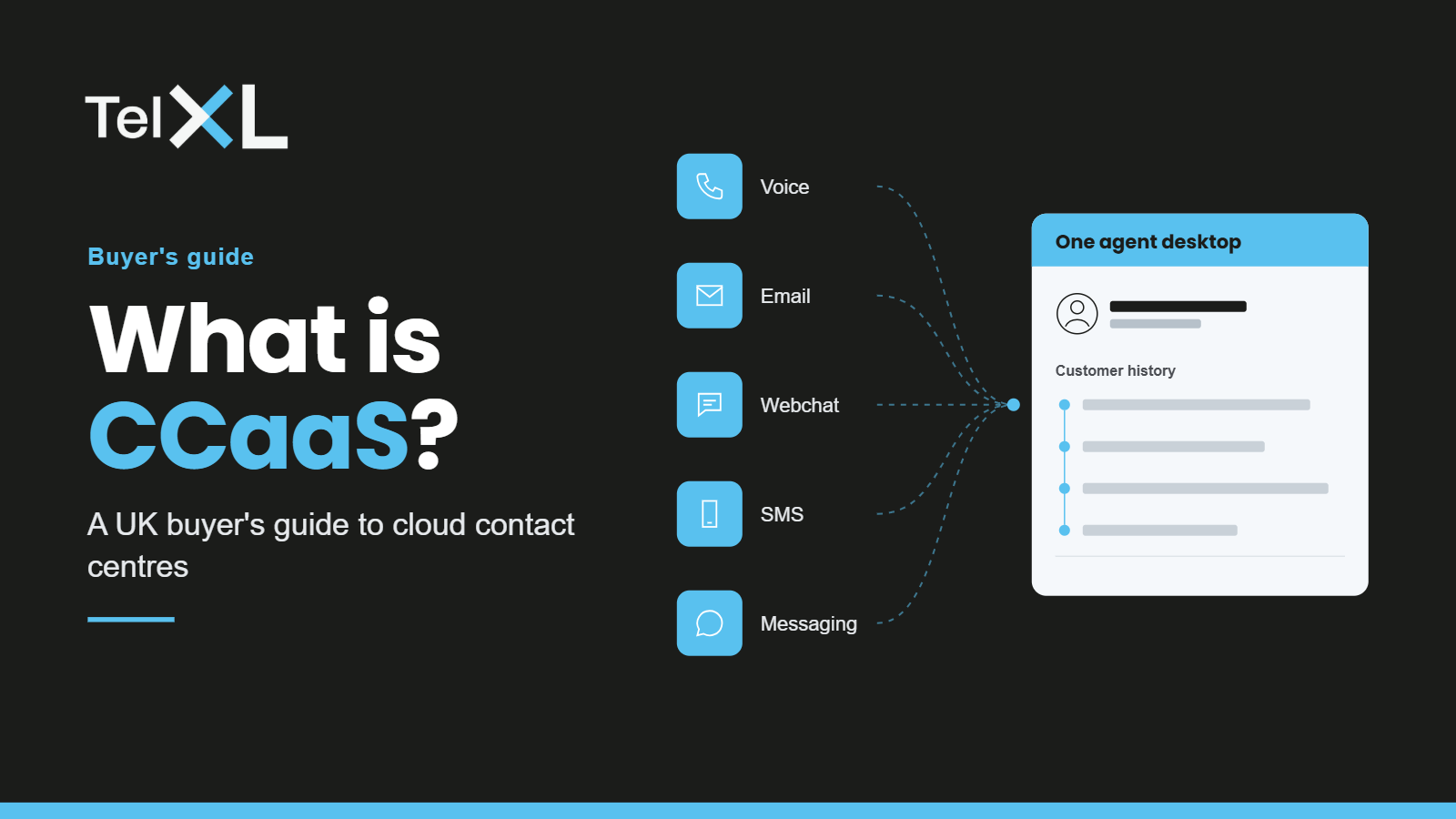
The word "contact" matters. A traditional call centre handles phone calls. A contact centre handles every way a customer might get in touch, which usually includes email, webchat, text messages and messaging apps as well as voice. Good CCaaS platforms treat all of those as part of one service, not as separate systems bolted together.
How Is CCaaS Different From an On-Premise Contact Centre?
The biggest differences come down to who looks after what, and how quickly things can change.
With an on-premise system, the equipment sits in your building or data centre. Your team or your supplier maintains it, upgrades are planned projects, and growing or shrinking the number of agents often means ordering and installing something. Changing how calls are routed usually needs specialist help.
With CCaaS, the provider runs the platform. Updates arrive without a project on your side. Adding agents or channels is a configuration change, not an installation. Agents can work wherever they have a browser and a headset. The best platforms also let business users change call flows themselves using visual tools, without waiting for an engineer.
None of this makes on-premise systems wrong for everyone. But for most small and medium contact centres, the flexibility of the cloud model is the reason they move.
What Does a CCaaS Platform Include?
Platforms differ, but a solid one covers the following ground.
Voice is the starting point: cloud telephony, an IVR to greet and route callers, callbacks, call recording and the ability for agents to take calls in the browser. Alongside it sit the digital channels. Email, webchat, SMS and messaging apps such as WhatsApp, Facebook Messenger, Instagram and Viber arrive in the same place.
Routing decides which agent gets which contact, using skills, customer attributes or service levels. Supervisors need real-time dashboards, the ability to listen in, coach and step in on live contacts, and reports that show how the whole operation is performing. Integrations connect the platform to the systems your business already uses, such as a CRM. And increasingly, AI features sit on top: virtual agents that handle routine enquiries, assistants that suggest replies to staff, live translation, and automated quality scoring.
TelXL's own platform, Cxp Contact Centre, is an example. It brings voice, email, webchat, SMS, WhatsApp, and social channels such as Facebook Messenger and Instagram into one agent desktop, with the customer's history alongside every contact, and connects to Microsoft Dynamics 365, Salesforce and ServiceNow, with open APIs for other systems.
Who Is CCaaS Right For?
It suits organisations that want to change how they serve customers without a long project. That includes small and medium contact centres that have outgrown a basic phone system, businesses with agents working from several locations or from home, and teams whose volumes rise and fall through the year.
It also suits organisations that want to add AI gradually. Platforms with AI built in let you start with the core contact centre and switch on capabilities later, without moving to something new.
What Should UK Buyers Check?
A few questions are worth asking every provider, whoever they are.
Where is the data hosted, and can voice and recordings stay in-country if you need that? Which security and quality certifications does the provider hold, and can they evidence them? What happens to call recordings, and who can access them? How does the platform connect to your CRM and other systems? How are new channels, agents and workflows added, and who does that work? What does onboarding look like, and who do you call when something goes wrong?
Ask for answers in writing. For Cxp Contact Centre, TelXL documents hosting in Microsoft Azure Europe with an option to keep voice and recordings in-country, service availability above 99.9%, ISO 27001 and ISO 20000 certification, GDPR compliance, encryption in transit and at rest, role-based access and audit trails. Whichever provider you choose, make sure the claims you rely on are written down.
What If You Already Have a System?
Moving to CCaaS doesn't have to be a single big-bang change. Many organisations start by adding capabilities around what they have. AI conversation analytics, for example, can sit on top of an existing platform such as Microsoft Teams, 8x8 or Five9 to show what's happening in calls before any decision about replacing anything. That evidence often makes the later platform decision easier.
When the time does come to move, a phased approach, starting with one team or one channel, lowers the risk and gives your agents time to adjust.
How Do Partners Fit In?
Many UK organisations buy contact centre technology through a reseller or technology partner who knows their business, helps design the solution, and supports it afterwards. That's particularly true for smaller teams that don't have specialist contact centre engineers in house.
TelXL sells exclusively through partners. The partner owns the customer relationship, and TelXL provides the platform, onboarding and ongoing support behind them.
Frequently Asked Questions
What is the difference between CCaaS and UCaaS?
UCaaS, or unified communications as a service, covers how people inside an organisation talk to each other: calls, meetings and messaging. CCaaS covers how customers get in touch with the organisation, with queues, routing, agents and reporting. The two overlap and often connect, for example when a contact centre agent uses Microsoft Teams to bring in a colleague.
Is CCaaS secure?
It can be, but it depends on the provider. Ask where the data is hosted, how it's encrypted, which certifications the provider holds and how access is controlled and logged. Don't accept general assurances. Ask for specifics in writing.
Can CCaaS work with our CRM?
Most platforms connect to common CRMs, but the depth varies. Ask what the connection actually does: whether agents can handle contacts inside the CRM, whether customer records appear automatically when a contact arrives, and whether other systems can be linked through open APIs.
How quickly can a CCaaS platform go live?
It depends on how many channels, integrations and agents are involved. Platforms with visual, no-code workflow tools tend to be quicker to configure. TelXL designs Cxp Contact Centre to go live in days rather than months, though your timeline will depend on the scope of your own setup.
Do we need AI to use CCaaS?
No. AI is an option, not a requirement. Platforms that have AI built in let you decide when to switch it on, so you can begin with the core contact centre and add virtual agents, agent assistance, live translation or automated quality scoring when you're ready.
Ready to see this in action?